

Car Key Programming Explained
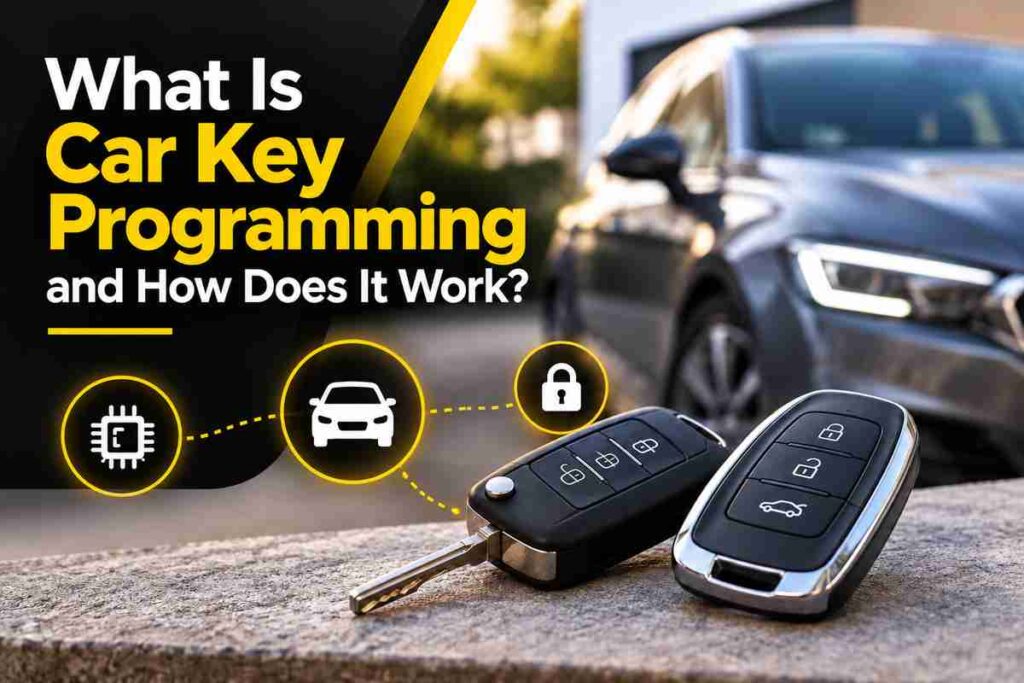
Car key programming is the process of electronically registering a car key with a vehicle so the car recognises it as authorised. On many modern vehicles, cutting the correct metal blade is only part of the job. The key may also contain a transponder chip or smart-key electronics that must communicate correctly with the vehicle’s immobiliser before the engine will start.
This is why a newly cut key can sometimes unlock a car yet fail to start it.
For UK drivers, understanding the difference between key cutting and key programming is useful when replacing a lost key, adding a spare or dealing with a “key not detected” problem.
What Does Car Key Programming Actually Mean?
Older car keys were mainly mechanical. If the shape of the key matched the lock and ignition, the vehicle could be opened and started.
Modern vehicles usually have another security layer.
Inside many keys is a small electronic transponder chip. When the key is used, the vehicle’s immobiliser checks whether the chip is recognised. If the correct electronic identity is confirmed, the immobiliser allows the engine to start.
Car key programming is the process of making that electronic relationship work.
Depending on the vehicle, programming may involve registering a transponder chip, pairing a remote fob, adding a smart key or setting up proximity functions.
The exact procedure varies between manufacturers, models and vehicle generations.
Key Cutting and Key Programming Are Not the Same Thing
This distinction causes a lot of confusion.
Key cutting creates the physical blade that fits the lock or ignition.
Key programming deals with the electronic security system.
A key can therefore be physically correct but electronically useless.
For example, a newly cut blade may turn in the ignition, but if its transponder has not been accepted by the immobiliser, the vehicle may refuse to start.
Some modern smart keys do not even use a traditional blade for normal driving. Instead, the vehicle detects the key electronically and allows push-button starting when an authorised key is nearby.
That is why modern replacement work often involves both mechanical and electronic stages.
How Does the Immobiliser Recognise a Car Key?
An immobiliser is designed to reduce the risk of a vehicle being started with an unauthorised key.
When an equipped key is brought into use, the vehicle reads information from the transponder chip. The security system checks whether that key is authorised for the vehicle.
If the key is recognised, the immobiliser allows the normal starting process to continue.
If it is not recognised, the vehicle may crank without starting, display a security warning or show a message such as “key not detected”.
The exact behaviour differs between vehicles.
This is also why simply copying the shape of a modern key is often not enough.
How Does Car Key Programming Work?
The details vary considerably, but the overall process usually follows several stages.
1. The Vehicle and Key System Are Identified
The locksmith first needs to establish exactly what system the vehicle uses.
Useful information includes the make, model, year and registration. The existing key type is also important because a standard transponder key, remote fob and proximity key may require different procedures.
This step helps determine the correct replacement hardware and programming method.
2. The Vehicle’s Security System Is Accessed
For many vehicles, specialist diagnostic equipment can communicate with the car through its OBD port, the diagnostic connection normally located inside the vehicle.
The equipment communicates with relevant vehicle modules and allows an authorised technician to carry out the correct key-learning procedure.
Security access varies by manufacturer, and some vehicles require PINs, security credentials or manufacturer-specific processes.
3. The New Key Is Registered
The replacement transponder or smart key is then introduced to the vehicle’s security system.
This is sometimes described as adding, learning, pairing or programming the key.
Once correctly registered, the vehicle should recognise the electronic identity of the new key.
4. Remote or Smart Functions Are Checked
If the key includes remote central locking, proximity entry or push-button start, those functions may also need to be configured or tested.
Not every vehicle handles these functions in exactly the same way.
5. The Key Is Fully Tested
A properly completed job should confirm that the key performs the functions it is supposed to.
That may include unlocking the doors, locking the vehicle, starting the engine, operating the boot and checking smart-key detection.
Testing is important because a key that starts the engine but does not operate the remote correctly may still require further work.
What Is OBD Car Key Programming?
OBD programming uses the vehicle’s diagnostic port to communicate with its electronic systems.
For many modern vehicles, this is the normal method used to add or register a replacement key.
A technician connects suitable diagnostic equipment and follows the vehicle-specific procedure required by the manufacturer’s security system.
Although this may sound simple, the actual security protocols can vary significantly between cars. Different manufacturers use different modules, access methods and programming routines.
For this reason, having generic diagnostic equipment does not automatically mean every vehicle can be programmed in the same way.
What Is EEPROM Programming?
Some vehicles cannot be dealt with through a straightforward diagnostic-port procedure.
In more specialised cases, a locksmith may need to work with data stored in an electronic control module. EEPROM refers to a type of memory used within electronic systems.
EEPROM-related work is more advanced and may involve reading security information directly from a vehicle module before preparing or registering a key.
It is not required for every car and should not be treated as the standard method for all key programming.
For most drivers, the important point is simply that some vehicles require deeper electronic work when normal diagnostic programming is not suitable.
Which Types of Car Keys May Need Programming?
Not every car key uses the same technology.
A traditional mechanical key may only need cutting, particularly on older vehicles.
A transponder key contains a chip that needs to be recognised by the immobiliser.
A remote key fob may combine a transponder with buttons for central locking.
A smart key or proximity key can communicate wirelessly with the vehicle and may support keyless entry and push-button starting.
The more advanced the key system, the more important correct electronic setup becomes.
When Might a Car Key Need Programming?
Programming is commonly required when a new key is being introduced to the vehicle.
This can happen when you are adding a spare, replacing a damaged key or creating a replacement after a key has been lost.
It may also become relevant when a vehicle no longer recognises a previously working key, although programming is not automatically the cause of every key fault.
A weak fob battery, damaged transponder, immobiliser problem or electrical issue can sometimes produce similar symptoms.
Proper diagnosis matters because reprogramming a key will not fix an unrelated vehicle fault.
Can a Car Key Be Programmed Without the Original?
For many vehicles, yes.
A working original can make the process easier, but losing every key does not necessarily mean a replacement cannot be created.
The process may simply be more involved because there is no existing working key to use as a reference.
If you are dealing with that situation, our guide on what to do if you lose your only car key in Leeds explains the practical steps without repeating the programming process covered here.
Why Is Having a Spare Key Useful?
A spare can reduce the chance of ending up with no working key at all.
It can also be useful if the everyday key becomes damaged or develops an electronic fault.
If you currently have only one working key, our guide to why you should have a spare car key covers the practical benefits in more detail.
For this article, the important programming point is that a spare key must be properly recognised by the vehicle. A key that has been cut but never programmed may not provide a useful backup.
Can You Programme a Car Key Yourself?
Some older vehicles have limited owner procedures for certain remote functions, but modern immobiliser key programming often requires specialist diagnostic tools and security access.
It is also important to distinguish remote-button synchronisation from immobiliser programming.
A procedure that makes lock and unlock buttons work does not necessarily mean the transponder has been authorised to start the engine.
For modern vehicles, a professional auto locksmith or an appropriate dealer is usually the safer option when a replacement key needs full programming.
Why Car Key Programming Matters
Car key programming is fundamentally a security process.
It allows the vehicle to distinguish an authorised key from an unauthorised one.
Without that electronic verification, modern immobiliser systems would offer far less protection against a copied or incorrectly matched key.
For drivers, the practical effect is simple: a modern car key must often be both physically correct and electronically authorised.
That is the key idea behind car key programming.
Final Thoughts
Car key programming connects a replacement or additional key with the vehicle’s electronic security system.
The process can involve a transponder chip, immobiliser, diagnostic equipment, OBD communication and, on some vehicles, more advanced methods such as EEPROM work.
The exact procedure depends on the vehicle and key type, but the principle stays the same: the car has to recognise the key as authorised before all of its functions will work correctly.
Understanding that distinction makes it easier to see why modern car key replacement involves more than simply cutting a new blade.